New Energy Lightning Protection and Grounding Engineering Solutions
I.Background Analysis
As a major country in both energy production and consumption,China’s new-energy industry has already ranked among the world’s largest.In recent years,China has achieved remarkable progress in developing new energy sources—particularly wind power and photovoltaic power generation—maintaining its position as the world’s largest in terms of installed capacity and steadily increasing its share of total electricity generation.Clean energy sources such as solar and wind power are widely adopted due to their sustainable and environmentally friendly characteristics.
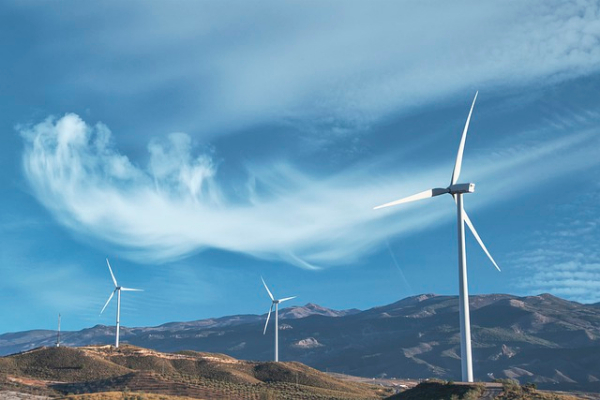
However,most new-energy power generation equipment is located in regions with complex geographical environments and variable climates,making them highly susceptible to the effects of natural conditions.In particular,wind power generation is commonly threatened by severe thunderstorms.On high-altitude mountaintops,the towering nacelle and blade tips of wind turbines are especially vulnerable to lightning strikes.
Moreover, the mountainous, Gobi, and desert terrains where wind farms are located result in relatively high soil resistivity, making it difficult for equipment to achieve effective grounding. Even if the grounding resistance (at power frequency) passes the test, the system may still trip and lose power—or even suffer equipment damage—when struck by lightning, leading to economic losses. Therefore, lightning protection engineering is a crucial safeguard for the safe and stable operation of new energy power generation systems.
II.Analysis of Lightning Protection Engineering Requirements
1. New energy equipment such as wind turbines and solar panels is typically installed in high-altitude areas, and the tips of turbine blades protrude, making them conducive to accumulating electric charges and thus more likely to be struck directly by lightning.
2. The terrain where new-energy power plants are located—characterized by rocky conditions with little soil and poor moisture content—results in persistently high grounding resistance and insufficient capacity of the grounding grid to store free charges. Particularly under high-frequency surges, the grounding resistance and ground voltage can rise sharply in an instant, triggering overvoltage-induced back-feeding trips.
3. Lightning is accompanied by intense electromagnetic induction, which generates large amounts of pulse energy in the power lines, causing overvoltage and overcurrent and leading to equipment failures and losses.
4. When induced lightning strikes metal conductors, a potential difference on the order of 10 kV can develop between adjacent metals, causing spark discharge across metal gaps—this is extremely dangerous.
5. Since new-energy power stations are located in remote areas, metal grounding electrodes are highly susceptible to environmental corrosion, significantly shortening the service life of the grounding grid. Some low-cost resistance-reducing measures—such as using resistance-reducing agents—can cause electrochemical corrosion of the metal grounding electrodes, further reducing the lifespan of the grounding grid and creating serious safety hazards, thereby actually increasing operation and maintenance costs.
6. The grounding grids of new-energy power plants located on water—such as high-altitude hydropower stations, floating photovoltaic power stations, fishery-photovoltaic complementary PV stations, offshore wind farms, and offshore PV stations—are submerged underwater. As a result, metal grounding components are highly susceptible to corrosion by the aquatic environment. These new-energy facilities, standing on broad, flat water surfaces, are prone to attracting lightning strikes. The humid conditions on water bodies easily cause condensation to form on the surfaces of electrical equipment; under the influence of electric fields, this condensation can distort the electric field distribution, leading to partial discharge. Such partial discharge may eventually cause breakdowns in insulators, cable joints, busbars, and other components, resulting in accidents—a phenomenon known as “moisture-induced discharge.” In severe cold weather, condensation can freeze on the surfaces of wind turbine blades, and in extreme cases, even lead to blade fractures. Moreover, the high-humidity and high-salinity air found over sea surfaces and in nearshore areas accelerates the corrosion and failure of metallic components, seriously shortening the service life of new-energy generation equipment.

III. Lightning Protection Engineering Solutions
1. Constructing a Qualified Grounding Network: A sound grounding environment is the prerequisite for the effective operation of lightning protection devices such as air-termination system(lightning rods) and surge arresters. By employing the flexible grounding technology developed by Oumaan Technology Group, we can swiftly establish a low-resistivity and stable current-dispersal environment. This technology enhances the grounding network’s capacity to store free charges and improves its tolerance level under high-frequency surges. The material used in this technology—“Flexible Grounding Electrode HD-R10 ”—forms a multidimensional, intricate pathway for charge movement at the microscopic level, thereby significantly boosting the efficiency of the grounding network in dissipating lightning currents.
Testing has shown that the HD-R10 rate of change in impact resistance test is 0.36%. Even under high-frequency surges, its grounding resistance remains low, significantly reducing the likelihood of backflashover tripping and ensuring the stability of new energy power generation. The flexible grounding electrode HD-R10 has a moisture content as high as 65%, enabling it to maintain low resistivity for an extended period even in arid regions. The material tightly encases the metal grounding electrode, preventing direct contact with soil and oxygen and thereby slowing down corrosion. By adopting this technology, the service life of galvanized flat steel can be extended by up to six times. After being formed, HD-R10 is insoluble in water and has been tested to meet the EU RoHS standards, posing no harm to human health or environmental pollution. The flexible grounding technology is easy to install and highly cost-effective, making it particularly well-suited for the construction and operation of new energy power generation projects—especially wind farms. Numerous successful cases have been achieved in new energy projects across multiple regions including Guangdong, Guangxi, Hainan, Guizhou, Yunnan, Sichuan, Chongqing, Hunan, Hubei, Fujian, Jiangxi, Shandong, Heilongjiang, Qinghai, and Xinjiang.
2.2. Lightning Protection Measures for Large-Scale Areas: For new energy projects—such as wind farms, overhead transmission lines, photovoltaic power stations, and floating photovoltaic power stations—that occupy large areas, are highly susceptible to lightning strikes, and pose challenges in accurately identifying lightning-related issues—HD-LDL online lightning monitoring systems should be employed. This patented technology, developed by Oumaan Technology Group, is compatible with existing smart grid systems. It enables dynamic monitoring of ground resistance values at various locations and provides real-time feedback on whether towers are experiencing overvoltages caused by lightning strikes. Additionally, it can accurately distinguish between direct strikes and backflashovers. By intelligently monitoring and collecting data, the system achieves both the collection of empirical data and early risk warnings. This approach not only reduces the time and costs associated with accident investigation but also allows for precise location of problems and targeted reinforcement of protective measures based on data analysis. Furthermore, it provides real-time insights into the root causes of issues, enabling focused and effective modifications.
3.Lightning protection measures for key protection areas:Air-termination system(lightning rods)can be installed at high places to attract lightning and lead it underground to protect important equipment from direct lightning. On the top of important facilities/buildings, HD-PLR plasma lightning rejector device can be installed to achieve active lightning, in the key areas to disperse lightning. The HD-PLR leverages the “tip-effect” of its array of multiple needles; under the influence of the electric field in thunderclouds, it operates without external power supply, keeping the protected object within a relatively low and safe electric field. The integrated composite high-ionization discharge device in the PLR is not hindered by the “self-shielding effect” typical of conventional lightning arresters. It ionizes the air to produce a high-concentration plasma that efficiently neutralizes the charge at the base of the thundercloud, creating a “bad capacitor” with leakage current between the cloud and the ground, thus promptly eliminating the lightning leader and ensuring that no lightning strikes are induced within the protected area, thereby safeguarding energy security. During the ionization process, the upward movement of positive ions helps purify the air, while the downward movement of negative ions promotes the health of living organisms. Both lightning receptors and lightning dissuasion devices can be equipped with lightning warning units featuring data storage capabilities, which can be used in conjunction with the HD-LDL online lightning monitoring system.

4. Lightning Protection Measures for Wind Turbine Blades: Install HD-PLR lightning-resistant needle plates at the blade tips. The “tip-effect” principle works similarly: when stimulated by thunderclouds, these plates alter the electric field environment around the blades, neutralizing the lightning leader and ensuring that the turbine blades are not struck directly by lightning. The ionization unit built into the PLR lightning-resistant needle plate dissipates charges from the thundercloud, while the grounding unit connects the needle plate to the earth, effectively neutralizing the charge between the cloud and the ground. Additionally, DSAN double sparse bionic coating should be sprayed onto the wind turbine blades. With its ultra-hydrophobic, ultra-oleophobic, and self-cleaning properties, this coating effectively prevents the formation of condensation and pollution flashovers—factors that easily cause electric field distortion on the blade surface. As a result, the likelihood of direct lightning strikes hitting the turbine blades is significantly reduced.
5. Induced Lightning Protection Measures: Install a surge protective device (power lightning arrester) at the power input end of the equipment. When induced lightning strikes the power lines, the surge protector will immediately divert the lightning current into the ground, ensuring the safe operation of the equipment. The HD series surge protective device all feature response times on the nanosecond (ns) level. In addition, it is necessary to establish equipotential bonding between electrical equipment and metallic conductors to prevent mutual discharge caused by potential differences generated by lightning between different pieces of equipment, and to avoid spark discharges across metal gaps that could lead to hazards such as fires.
6. Underwater Grounding Grid: To address the challenge of difficult grounding in floating photovoltaic power stations, high-altitude hydropower stations, offshore wind turbine units, and other similar installations, Oumaan Group has developed a flexible grounding electrode specifically designed for underwater applications and has obtained a national patent for it. The process involves inserting a metal core into a specially designed casing, then filling the remaining space within the casing with “Flexible Grounding Electrode HD-R10.” The entire grounding grid is submerged underwater, with the casing providing protection for the flexible grounding electrode and the flexible grounding electrode itself protecting the metal grounding electrode. All materials used meet environmental standards and effectively shield the metal grounding electrode from corrosion caused by water, thereby maximizing the service life of the grounding grid.
7. Lightning Protection Measures for Offshore/Seasurface New Energy Equipment: The composite high-intensity ionization discharge device inside the HD-PLR plasma lightning rejector system can provide safe protection even under the most challenging ionization conditions at sea level. With a protection angle of 84°, it effectively repels and disperses lightning strikes in key protected areas. The PLR system has achieved numerous successful applications in coastal regions prone to severe thunderstorms, nearshore areas, islands, naval bases, and other similar locations. To address issues such as discharge breakdown, corrosion, and icing of new-energy metal components caused by phenomena like condensation and salt spray, DSAN’s “dual-superhydrophobic” biomimetic coating can effectively prevent the formation of water droplets and water films on component surfaces.
The “dual-superhydrophobic” bionic coating from DSAN features ultra-hydrophobic properties that prevent salt-laden droplets in salt spray from adhering to the substrate surface, thereby completely eliminating the possibility of electrochemical corrosion. The structure that promotes hydrophobic migration ensures that the coating surface delays ice formation and facilitates easy ice removal, effectively mitigating the impact of icy conditions in severe cold weather. Moreover, the DSAN “dual-superhydrophobic” bionic coating boasts exceptional oil-repellent and self-cleaning characteristics, which can effectively prevent creepage and flashover on substrate surfaces caused by bird droppings and pollution-induced contamination. The DSAN “dual-superhydrophobic” bionic coating is easy to apply and can be used even on aging equipment. It can be sprayed onto surfaces of new-energy wind turbine blades, various types of insulators, insulating sleeves, insulating supports, power transmission towers, and other similar equipment, providing effective protection against harsh environmental conditions such as high humidity in maritime climates and high salinity in coastal regions.
IV.Summary
Lightning protection engineering is an important component in ensuring the safety and stability of new energy generation equipment. By implementing targeted lightning protection measures according to specific needs, we can significantly reduce the risk of failures caused by lightning strikes, thereby guaranteeing the operational stability of the equipment. At the same time, strengthening the management and maintenance of lightning protection efforts is also crucial for ensuring the long-term effectiveness of the lightning protection system.
Want to get more flexible grounding electrode related information,welcome to call the hotline!
Recommended lightning protection products:
HD-Y Series Optimised Lightning Rod: Larger Protection Radius + Longer Service Life.
HD-R10 Flexible Grounding Electrode: Outstanding Resistance Reduction Performance + Corrosion Resistance + Safe and Environmentally Friendly + Easy to Install.
HD Series Surge Protection Device: Low Residual Voltage at Output + Long Service Life + Extremely High Safety Performance.
HD-PLR Plasma Lightning Rejector Device: Disperses lightning in critical areas, easy to install, and suitable for moving targets.
HD-LDL Lightning Online Monitoring System: Real-time online monitoring + rapid alerting function + provision of reliable data.
DSAN Double Sparse Bionic Coating: Anti-Fogging, Salt Spray & Corrosion Resistance, Anti-Pollution Flashover, Ice Disaster Prevention, and Easy to Apply by Spraying.