Flexible Grounding Technology-ComprehensiveSolution to Various Types of Lightning Protection and Grounding Engineering Problems
I. Technical Introduction
Flexible grounding technology is capable of establishing a safe grounding system for power grids or electrical equipment. This system not only provides a consistently low and stable soil resistivity environment over the long term but also significantly enhances the lightning withstand capability of the grounding grid against lightning overvoltage. Such a design ensures that, even under high-frequency lightning impulses, the grounding grid can rapidly dissipate lightning current. This prevents electrical equipment from being damaged by back flashover caused by ground potential rise (GPR), thereby guaranteeing the safety and stability of equipment operation.
The construction of flexible grounding technology is straightforward and features strong corrosion resistance. While reducing the construction costs of the grounding grid, it also substantially extends its service life. Furthermore, all materials utilized in this technology comply with environmental protection standards and will not pollute the environment.
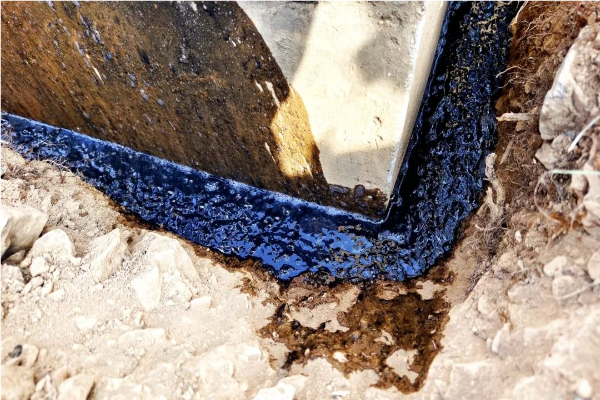
Flexible grounding technology has been widely applied in lightning protection retrofits for new energy power generation,collector lines,overhead transmission lines,and substations.Its resistance reduction effect is particularly remarkable in areas with high soil resistivity,such as mountains,deserts(Gobi),and tunnels.
Since the retrofitting,none of the projects have experienced a single trip accident caused by lightning strikes.This has led to a corresponding reduction in operation and maintenance(O&M)costs,delivering substantial economic and social benefits.This technology has received an appraisal of scientific and technological achievements in China,being rated as"internationally leading."
Matching Products
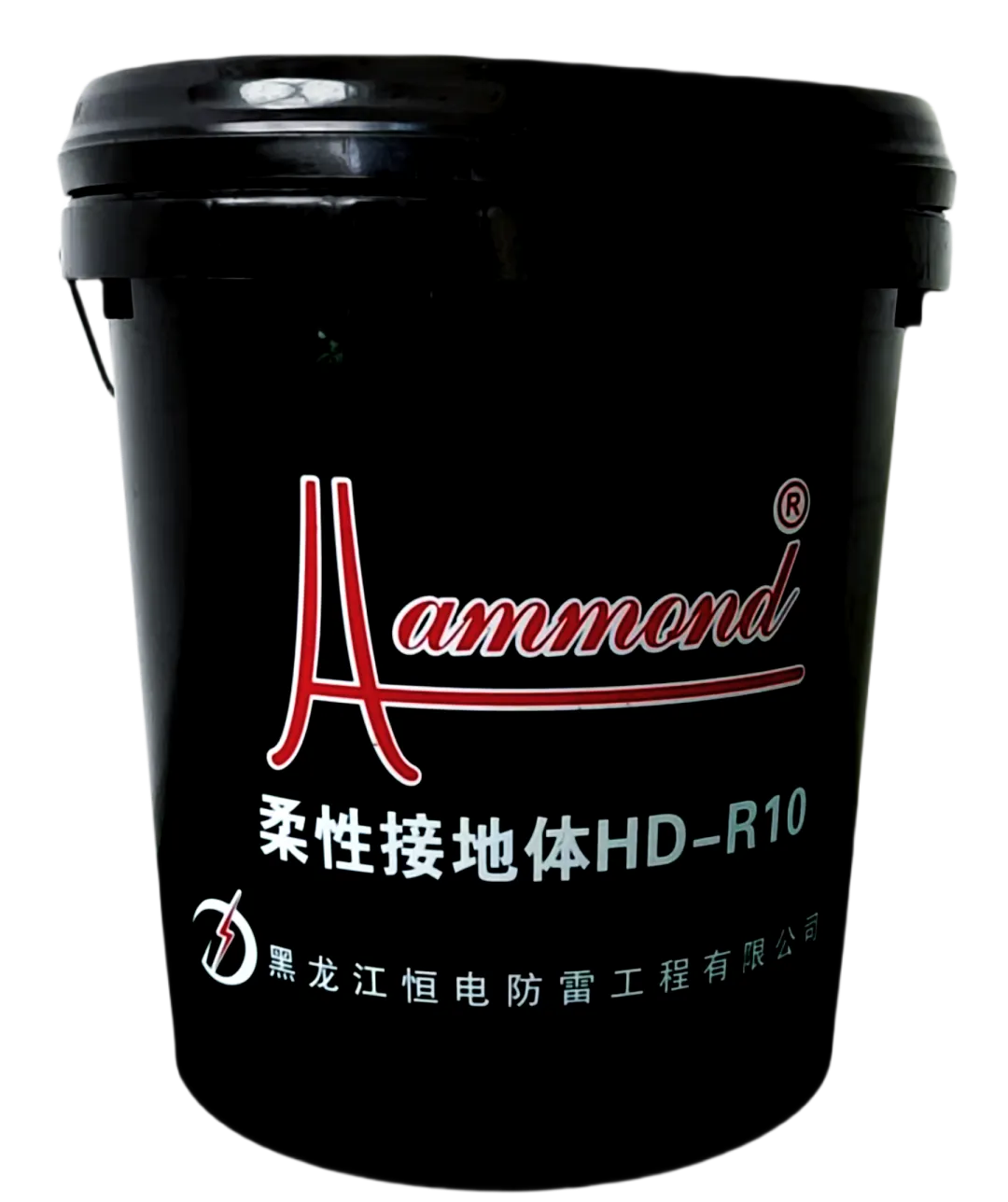
HD-R10 Flexible Grounding Electrode
Liquid Pouring
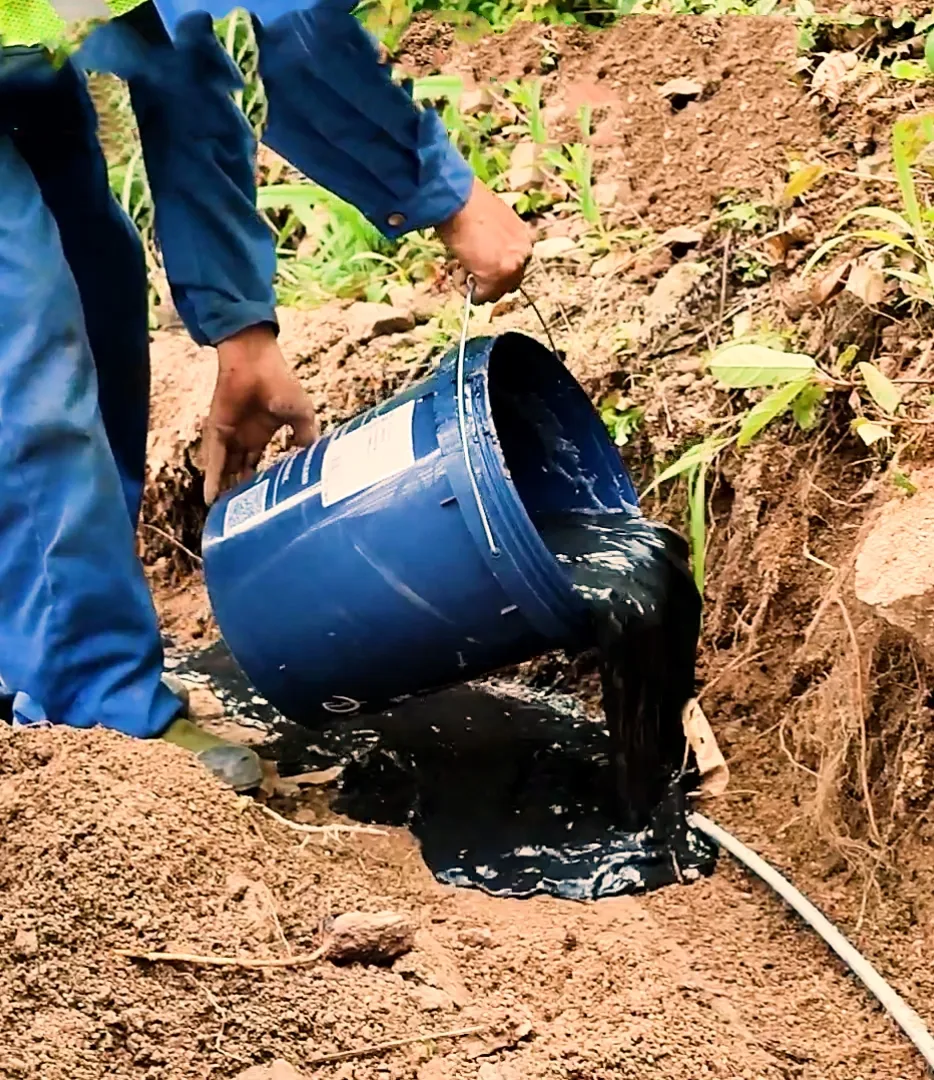
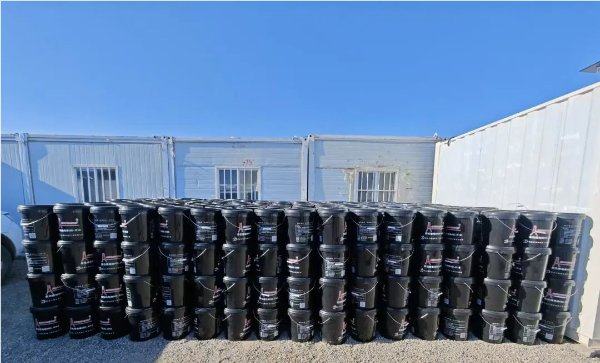
The HD-R10 Flexible Grounding Electrode is a nano-scale non-metallic conductive material. It is poured into the ground in liquid form, filling and permeating the gaps within gravel and soil. It encapsulates the metal grounding electrode and bonds tightly with the surrounding rock and soil. During the process of seepage and diffusion, it solidifies into a conductive gel that integrates with the surrounding environment, forming a composite grounding grid with a unified structure. This significantly increases the effective contact area between the grounding device and the earth.
Leveraging its inherent properties that facilitate charge transfer, the HD-R10 Flexible Grounding Electrode creates multi-dimensional discharge channels. This enhances the efficiency of lightning current dissipation and significantly reduces both power frequency and impulse grounding resistance
.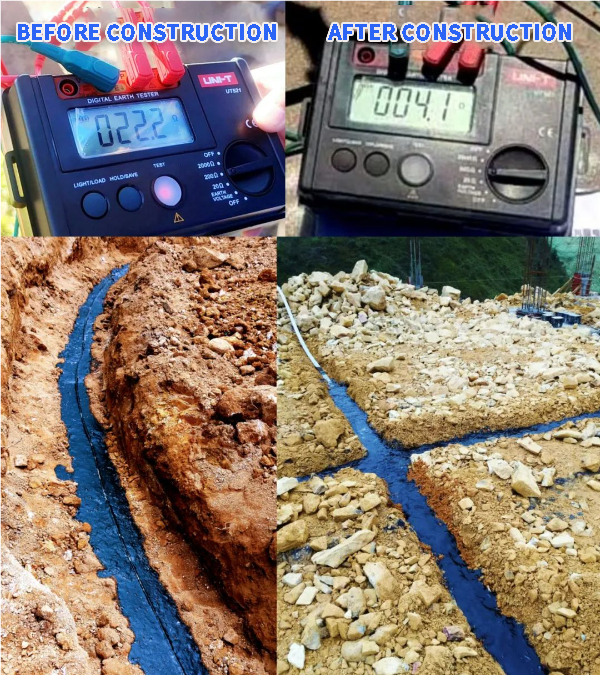
Lower resistance efficiency coefficient of HD-R10 reaches 0.16, a benchmark that no existing grounding product on the market can achieve. Once cured, it becomes insoluble in water and retains a high internal moisture content of up to 65%, which is not easily lost. Therefore, its resistance reduction effect can be maintained over the long term, even in arid regions such as deserts and the Gobi.
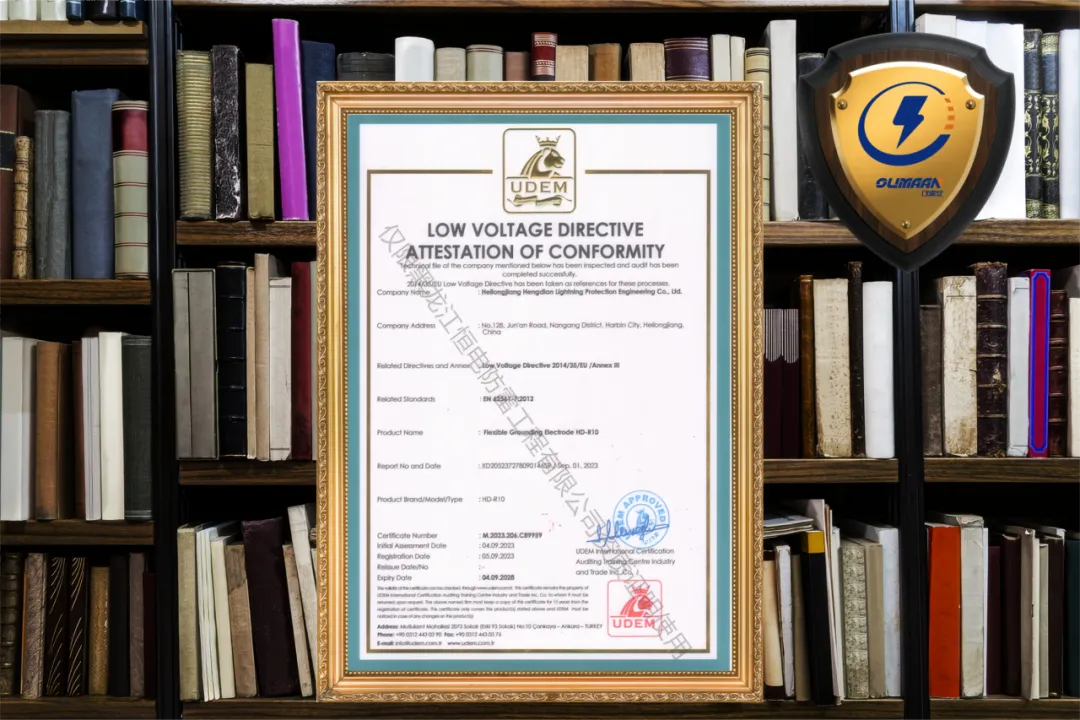
Testing has confirmed that HD-R10 complies with both national standards and international RoHS environmental standards. It is harmless to the human body and does not pollute the environment.
The HD-R10 Flexible Grounding Electrode also provides protective benefits for metal grounding devices. Test results indicate that in highly corrosive soils, HD-R10 can extend the service life of galvanized flat steel by six times.
Features & Benefits
1.Highly reduces grounding resistance
2.Enhances lightning withstand level of lines
3.Prevents corrosion of grounding metals
4.Simple construction, safe and eco-friendly
II. Lightning Protection Mechanism
Factors Affecting Power Frequency Grounding Resistance
The moisture content of the grounding grid not only affects the total amount of electrolytes in the soil but also influences the electrical connectivity between the metal and the soil, as well as between soil particles themselves.
Electrical conduction in the earth relies primarily on ions dissolved in moisture. Therefore, a soil environment that is better at retaining moisture will have more stable water content, which is highly conducive to the diffusion and dissipation of electric current.
The current dissipation area (S) consists of the laying area of the grounding grid and the effective contact area between the grounding device and the earth (i.e., the degree of affinity).
Soil resistivity (ρ) is mainly influenced by soil moisture content, the concentration of ions dissolved in pore water (i.e., the ability of the grounding grid to store free charges), soil temperature, soil compaction, and soil texture.
Another factor affecting soil moisture content is the soil's water retention capacity. The interior of rocks is non-conductive, which causes grounding resistance to remain stubbornly high, often reaching several thousand ohms. Gravel, on the other hand, has high permeability; the total volume of pore water is low and easily lost, resulting in unstable grounding resistance.
Causes of Lightning-Induced Line Tripping
Under high-frequency lightning impulses, the power frequency grounding resistance—which is normally considered "qualified"—can spike instantaneously. This results in an impulse grounding resistance value that cannot be detected during routine inspections.
When lightning current cannot be dissipated instantly, it causes a sharp rise in ground potential. The immense lightning energy then punctures the insulators and acts upon the line, generating massive overvoltage and overcurrent. This leads to short-circuit tripping. This is precisely why accidents still occur during lightning strikes on projects where grounding resistance tests had previously passed.
Fundamentally, a lightning strike is the neutralization of electric charges. Some grounding grids may pass resistance tests but possess a small capacity for storing free charges, resulting in a low lightning withstand level. They fail to meet the requirement of instantly neutralizing the immense energy of a lightning strike. Consequently, such grounding grids often cause tripping during thunderstorms. Yet, post-incident inspections show normal grounding resistance, making the root cause difficult to identify.

HD-R10 Lightning Protection Mechanism
1. Liquid Injection for Significant Resistance Reduction
The construction method of liquid pouring followed by gel formation not only greatly increases the current dissipation area of the grounding grid but also provides a stable carrier for electrolyte ions, maintaining a low soil resistivity environment over the long term.
2. Expanding Grid Capacity to Eliminate Tripping
By utilizing conductive ions present within the solution gel, it expands the impulse capacity of the grounding grid and enhances its ability to instantly neutralize opposite lightning charges. This significantly improves the lightning withstand level of the line.
3. Isolating Corrosion to Protect Metals
The liquid gel tightly encapsulates the metal grounding electrode, preventing contact between the metal and oxygen or acidic substances in the soil. Within this unified grounding model, electrochemical corrosion of the metal is effectively prevented.
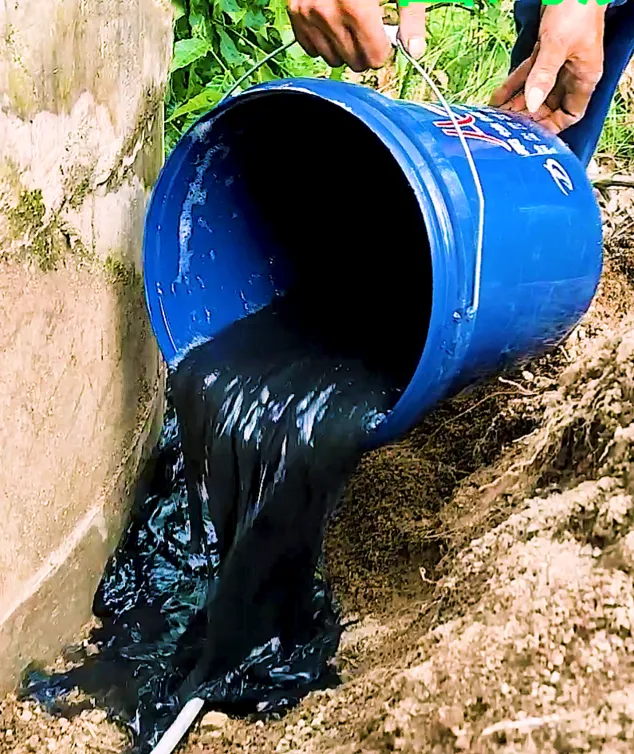
Before Curing: Liquid State
1. Soil Resistivity — Reduced
Liquid injection automatically fills the gaps between gravel and stones, tightly bonding them together. It solidifies during the process of diffusion and permeation, forming a unified current dissipation structure.
2. Effective Contact Area of Grounding Grid — Increased
The liquid construction method ensures close adherence to surfaces. This transforms the contact mode from multi-point contact (typical between smooth metal and solid gravel) into full surface contact, significantly increasing the current dissipation area of the grounding device.
3. Capacity of Grounding Grid to Store Free Charges — Expanded
Sufficient moisture content guarantees a high total volume of conductive ions dissolved in water. This expands the impulse capacity of the grounding grid by dozens of times, effectively counteracting the immense energy of lightning strikes.
After Curing: Unified Grounding Model
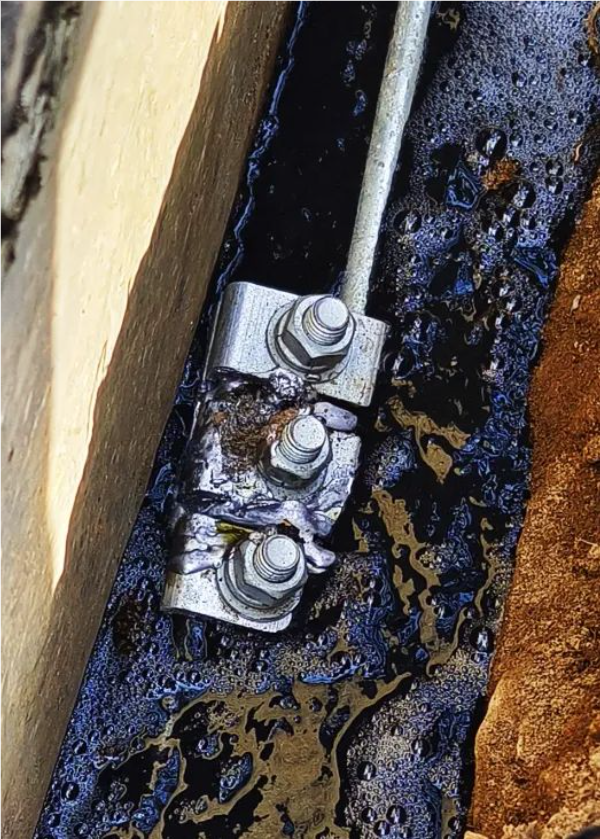
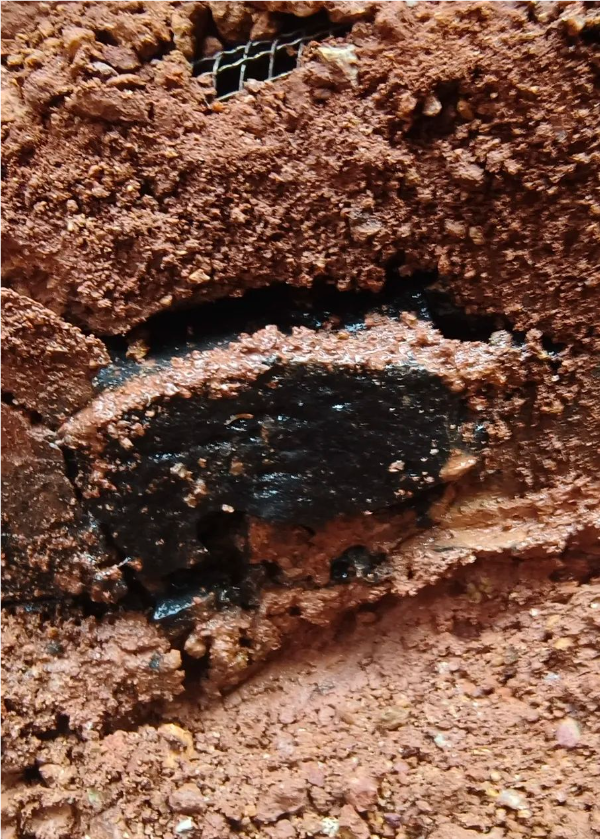
The basic grounding body and the nearby soil/rocks are tightly bonded together by the conductive gel solution, forming a unified composite grounding grid that fully integrates with the earth.
Physical Form: It solidifies during the permeation process, ultimately forming a moisture-rich, soft, and elastic conductive gel. By locking fine conductive particles and electrolyte solutions within the colloid, it guarantees electrical conductivity while ensuring minimal water loss, thereby maintaining long-term stability in resistance reduction.
Molecular Structure: After curing, it exhibits a unique multi-dimensional reticulated (mesh-like) structure at the microscopic level. This not only facilitates the storage and movement of electric charges but also prevents moisture loss within the tight and stable network. Once cured, HD-R10 becomes insoluble in water while retaining certain hygroscopic properties, ensuring it will not be washed away or diffuse with rainwater.
Natural Integration: By filling the pores, it bonds the basic metal grounding body with the surrounding soil, gravel, and rocks, significantly reducing contact resistance and forming a unified grounding model.
Consequently, the surface of the metal grounding body no longer exhibits anodic or cathodic polarity. With no direct physical contact between the metal and the natural environment, electrochemical corrosion and oxidative corrosion are effectively inhibited.
Demonstration of Anti-Corrosion Effect on Metal Grounding Bodies
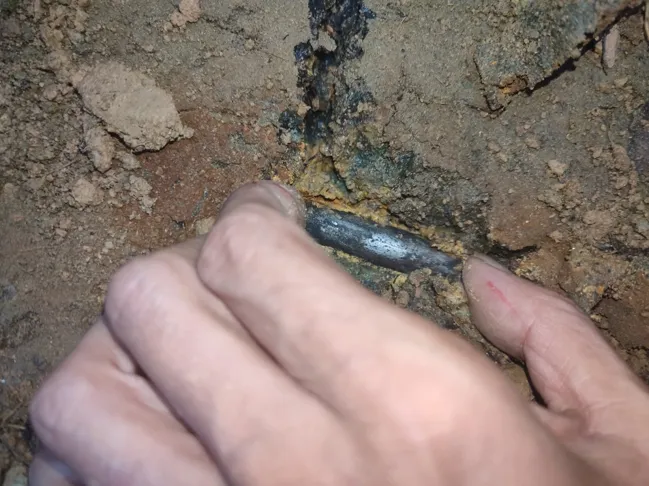
Excavation inspection of a tower in Sichuan after two years revealed the galvanized layer remained intact.
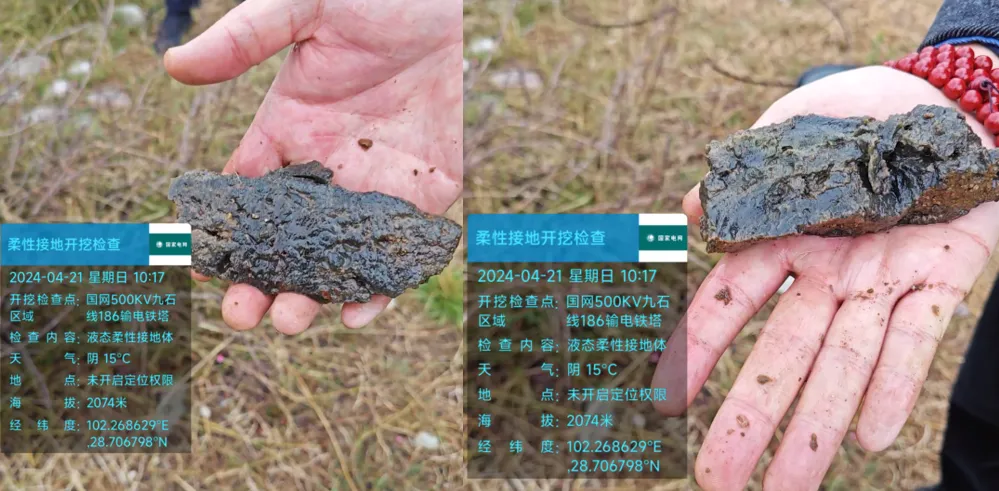
Excavation of a Tower in Sichuan after Over Two Years: Observation of Flexible Grounding Electrode Morphology
Key Technical Parameters
Resistivity: <0.1Ω·m
Intrinsic Moisture Content: >65%
Lower resistance efficiency coefficient: 0.16
Experimental change rate of power frequency resistance: 2.22%
Rate of change in impact resistance test: 0.36%
Corrosion test with galvanized flat iron: 0.005mm/year

Comparison of Test Results with IEC/EN Standards


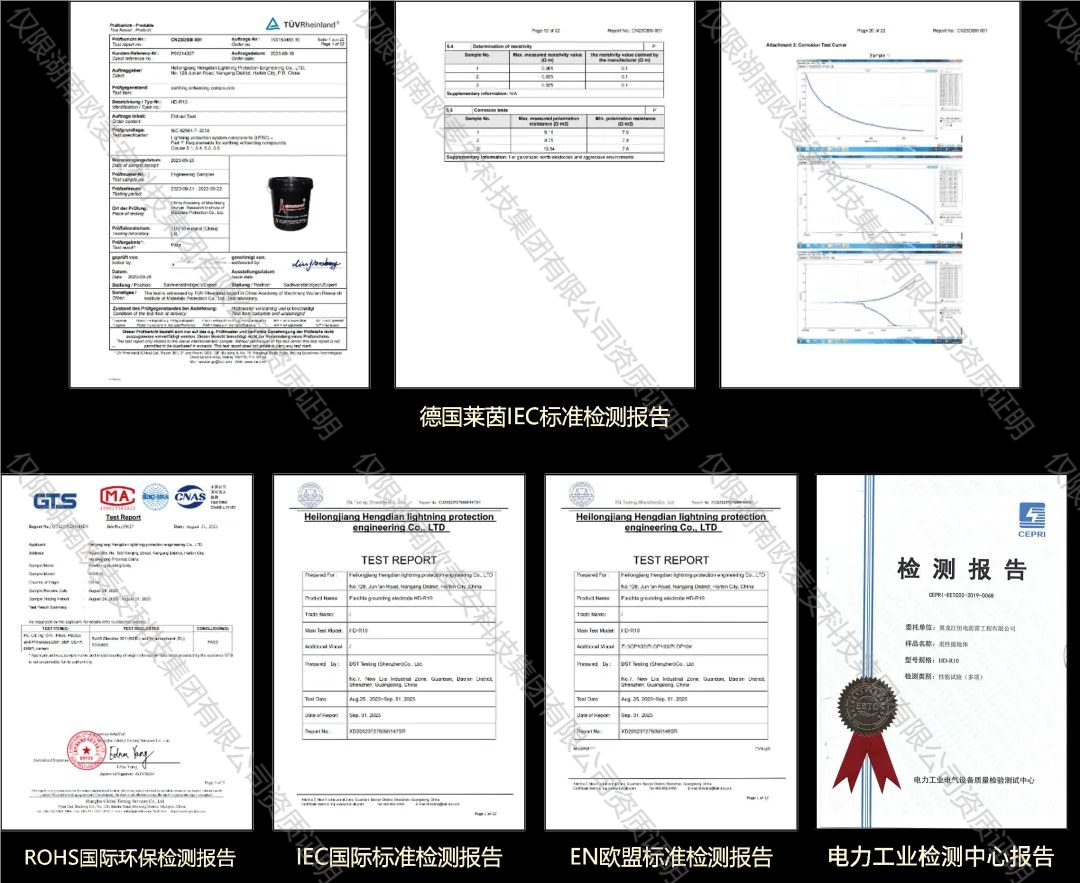
TÜV Rheinland Test Results Based on IEC International Standards
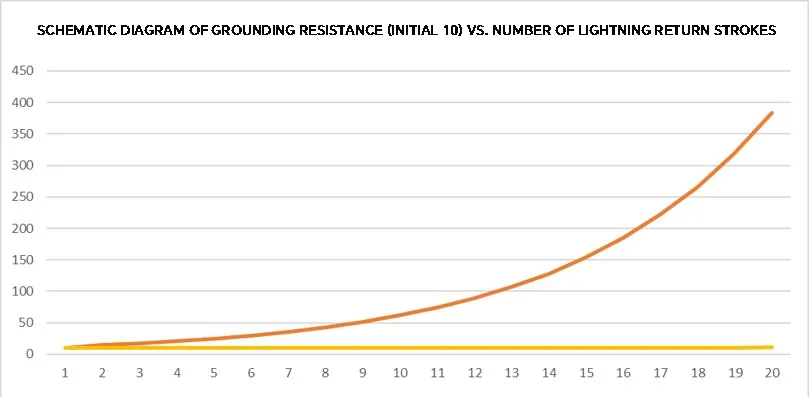
Schematic Diagram of HD-R10 Shock Resistance Test Variation Rate 0.36%
(Compared with QX/T 104-2009 Standard)
III. Technical Comparison and Advantages
Common Grounding or Resistance Reduction Products
Graphite grounding modules, graphite resistance reduction mats, and other types of resistance reduction mats.
These expand the contact area of the grounding grid by increasing the laying surface; however, their contact efficiency is lower than that of metal grounding bodies.
Lightning Withstand Level of Grounding Grid: No improvement
Corrosion Protection of Metal Parts: Limited corrosion protection
Graphite ropes, graphite tapes (or wires), and graphite-based "flexible" grounding electrodes
The graphite-based "flexible" grounding electrode is essentially just a novel, rebranded name for traditional graphite ropes or tapes. It is often used as a substitute for metal grounding bodies like hot-dip galvanized flat steel. However, it possesses no inherent resistance-reduction capability and functions merely as an artificial grounding body without any specific resistance-lowering measures. Its current conduction capacity and thermal capacity are both inferior to those of metals, making it prone to overheating or even burning out during lightning strikes—though it does offer better corrosion resistance than metal.
Lightning Withstand Level of Grounding Grid: Decreased
Corrosion Protection of Metal Parts: Substitution / Limited protection
Grounding Short-Circuit Current: Increased (Due to the small cross-section of the metal part or the complete absence of metal, it is prone to burnout under lightning strikes)
Chemical resistance-reducing agents, bentonite, etc.
They improve soil resistivity in the short term by briefly increasing the grounding grid contact area and reducing contact resistance through watering.
Lightning Withstand Level of Grounding Grid: Temporarily improved
Corrosion Protection of Metal Parts: Severe corrosion
Ionic Grounding Electrode
Significantly improves soil resistivity in the short term. By continuously releasing inorganic salt solutions, it increases the grounding grid contact area and reduces contact resistance. The copper pipe acts as a vertical grounding electrode; however, once the solution is depleted, only the copper pipe remains effective.
Lightning Withstand Level of Grounding Grid: Temporarily improved
Corrosion Protection of Metal Parts: Prone to electrochemical corrosion; requires the use of copper materials (to mitigate this).
Flexible Grounding Technology
Balances the long-term effectiveness and diffusion capability of resistance reduction measures, simultaneously improving the surrounding soil resistivity and current dissipation area.
The liquid injection construction method ensures full bonding between the grounding grid and the earth, greatly increasing the effective cross-section of the grid. While it improves the surrounding soil resistivity, the material does not further diffuse or dissipate after solidification.
The water-retention properties of the flexible grounding electrode after curing are also beneficial for maintaining a low-resistivity environment over the long term.
Additionally, by providing corrosion protection to the metal grounding device, it prevents the grounding resistance from rebounding (increasing) due to corrosion-induced breakage of the grid.
Lightning Withstand Level of Grounding Grid: Maximized
Corrosion Protection of Metal Parts: Isolated corrosion protection
Application Scope of Flexible Grounding Technology:
Mountain Lightning Protection & Grounding
Rocky Terrain Grounding
Underwater Lightning Protection & Grounding
Desert Lightning Protection & Grounding
Industrial Site Grounding
Laboratory Building Lightning Protection & Grounding
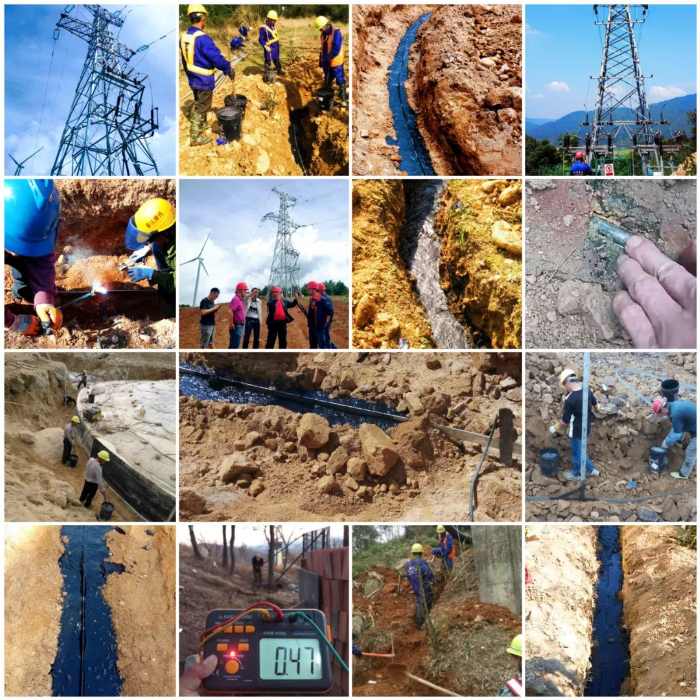
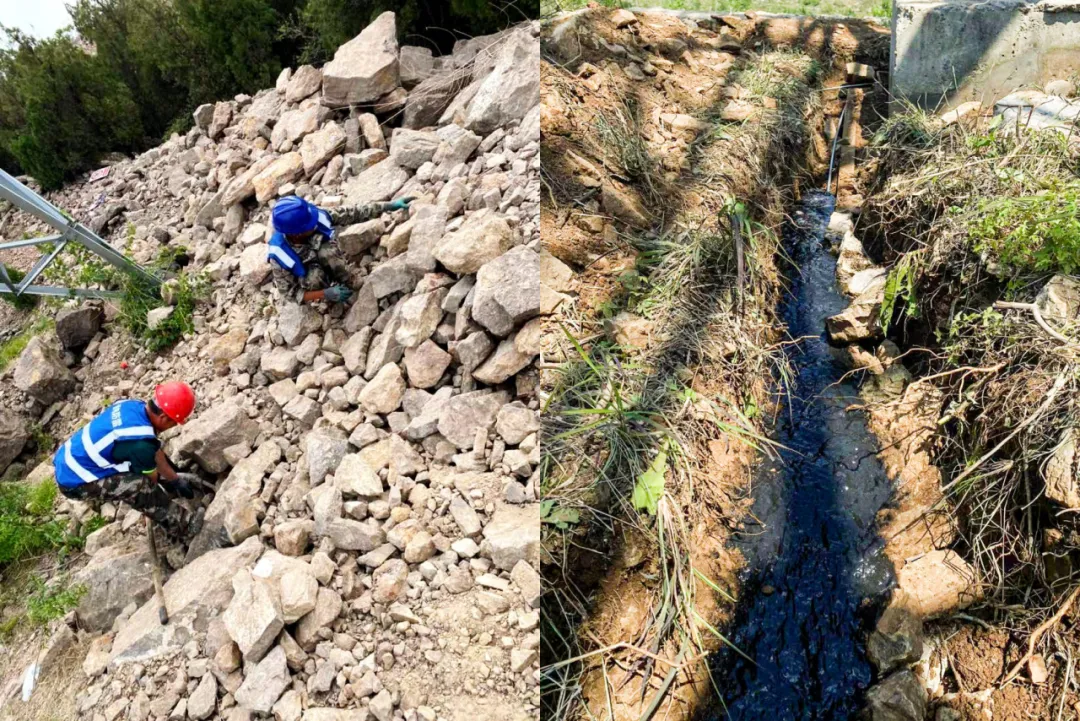
On-site Construction Photos of Flexible Grounding Technology
IV. Oumaan Group
Hunan Oumaan Technology Group has been deeply rooted in the lightning protection industry for 24 years, dedicated to researching lightning protection and grounding technologies for transmission lines, substations, and new energy power generation projects. The company has established in-depth partnerships with prestigious research institutions and universities, including the State Grid Electric Power Research Institute, CSG Electric Power Research Institute Co., Ltd., Harbin Institute of Technology (HIT), Huazhong University of Science and Technology (HUST), and Beijing University of Technology.
Oumaan's proprietary Flexible Grounding Technology has effectively solved the challenges of resistance reduction and lightning-induced tripping in high-resistivity areas such as mountains and deserts. This innovation has pioneered a new path in grounding and resistance reduction, reaching an internationally leading level.
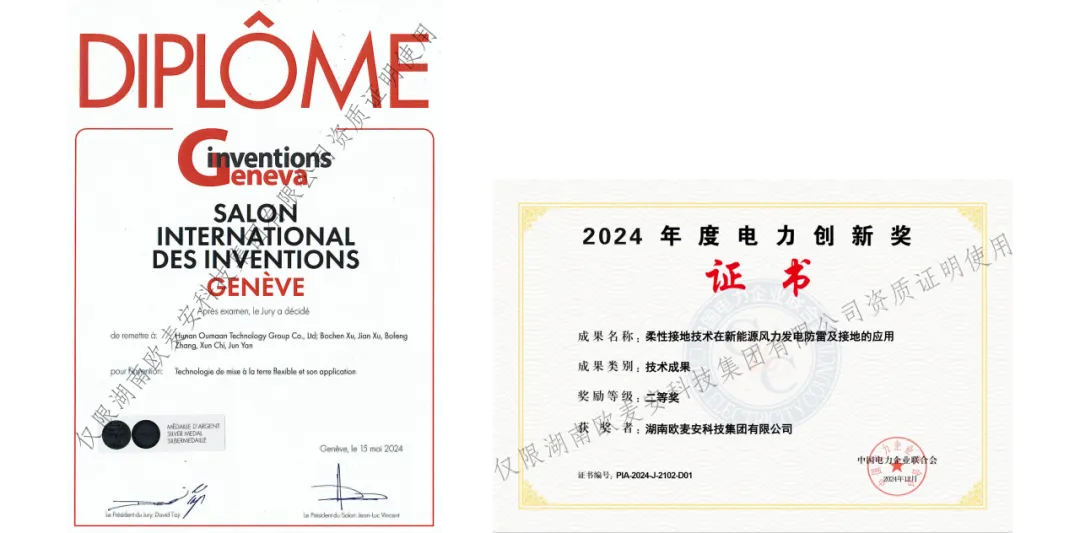
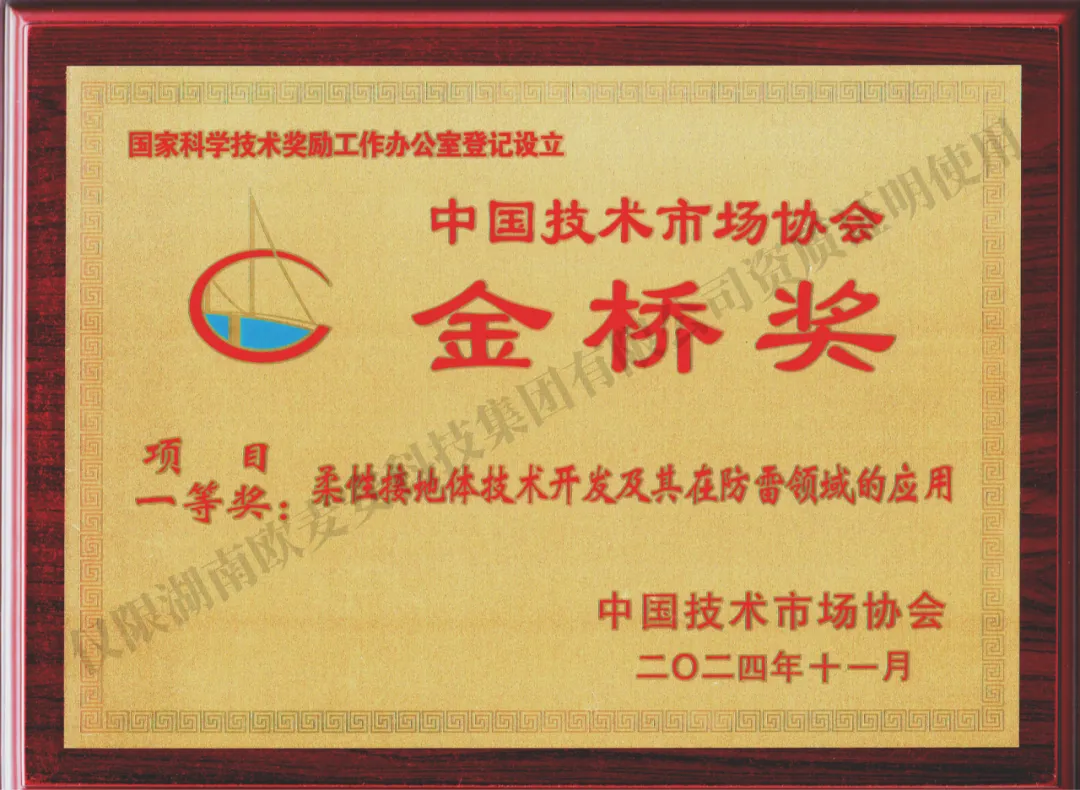
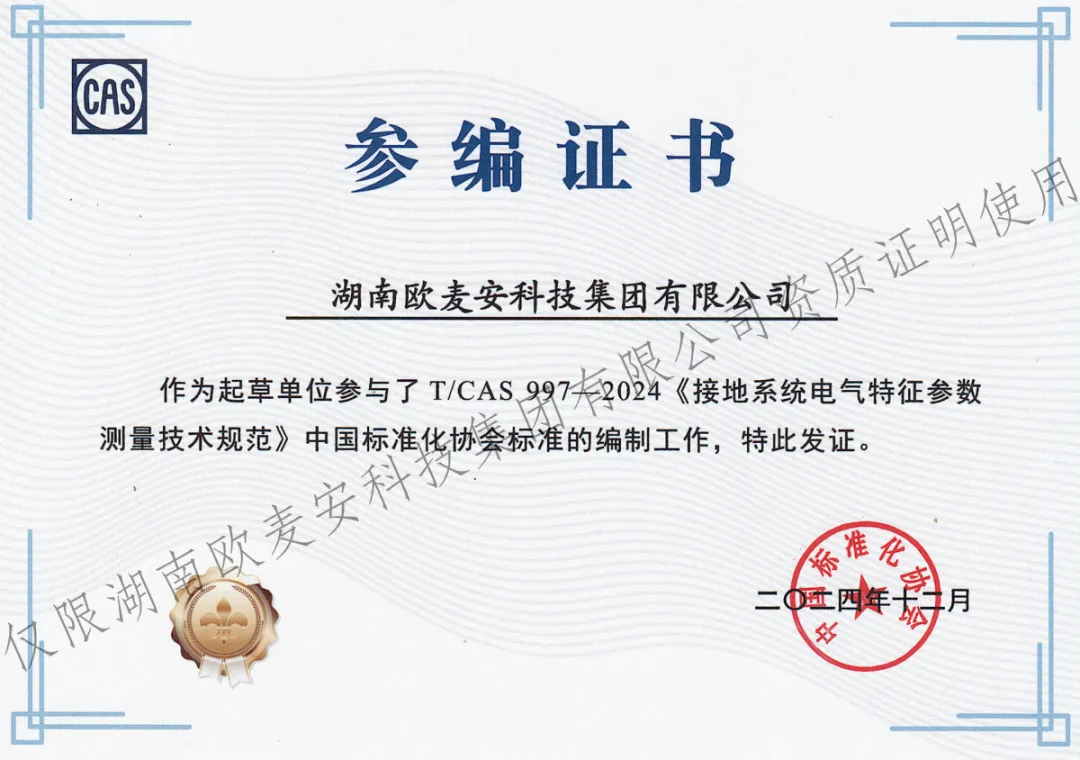
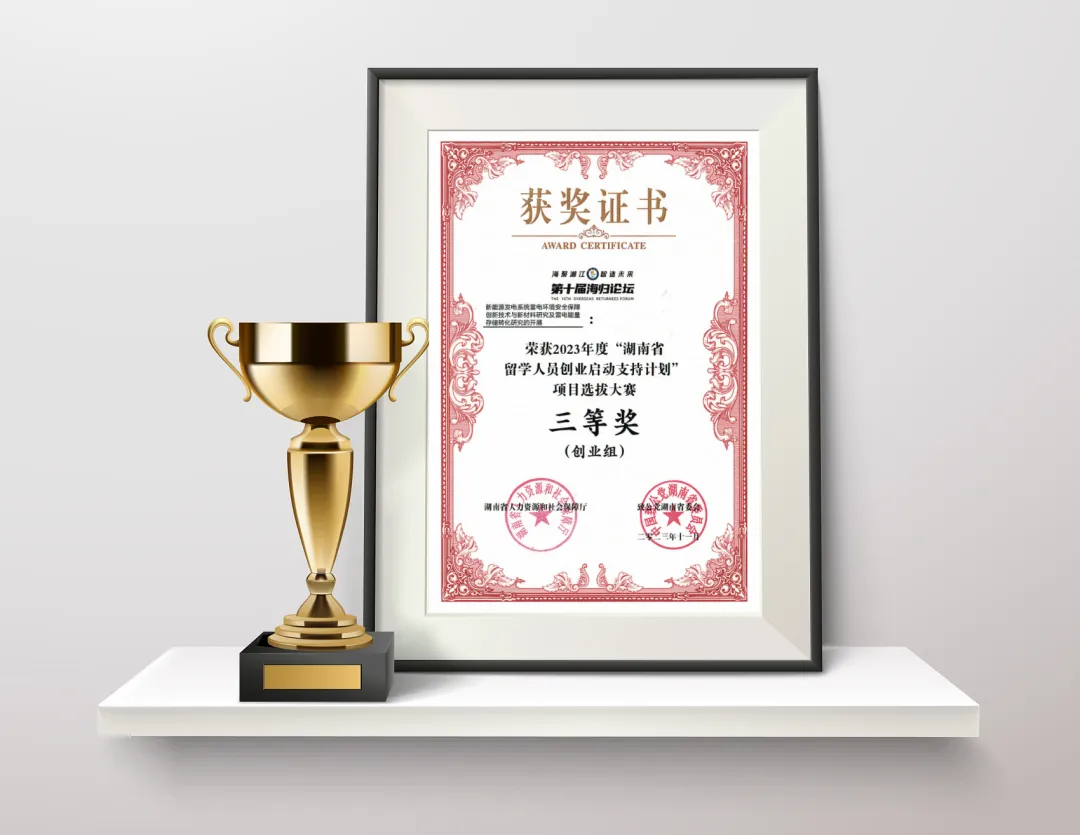
In 2020, the Group provided lightning protection technical support for the national key project, the "Tianqin Project." In 2022, it became the lightning protection industry partner for CCTV's "Entrepreneurship" program. In 2023, it received the Certificate of Scientific and Technological Achievement from Zhonggaoke. In 2024, Oumaan was honored with the First Prize of the "Golden Bridge Award" by the China National Technical Market Association and the Second Prize of the Electric Power Innovation Award by the China Electricity Council (CEC). In the same year, the Group also participated in the compilation of the China Standards Association standard T/CAS 997-2024, Technical Specification for Measurement of Electrical Characteristic Parameters of Grounding Systems.
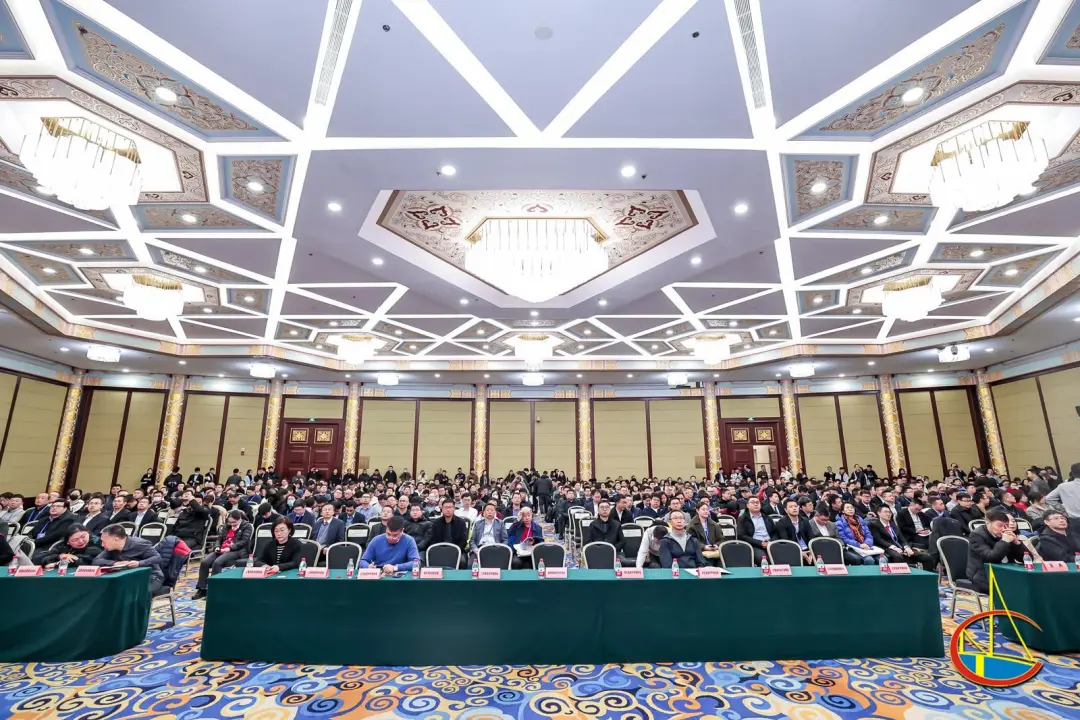
Award Ceremony of the "Golden Bridge Award" by the China National Technical Market Association
The name 'Oumaan' is a tribute to the contributions of German physicist Ohm, British physicist Maxwell, and French physicist Ampère to the field of electrical engineering.

Corporate Honors
V. Application Cases
Retrofit Project of Diaoyutai Wind Farm, New Energy Power Generation Branch of SPIC Jiangxi Electric Power Co., Ltd.
Awarded the Excellent Scientific and Technological Achievement in Wind Power Technology Retrofit at the 1st (2021) National Wind Turbine Technology Retrofit Annual Conference
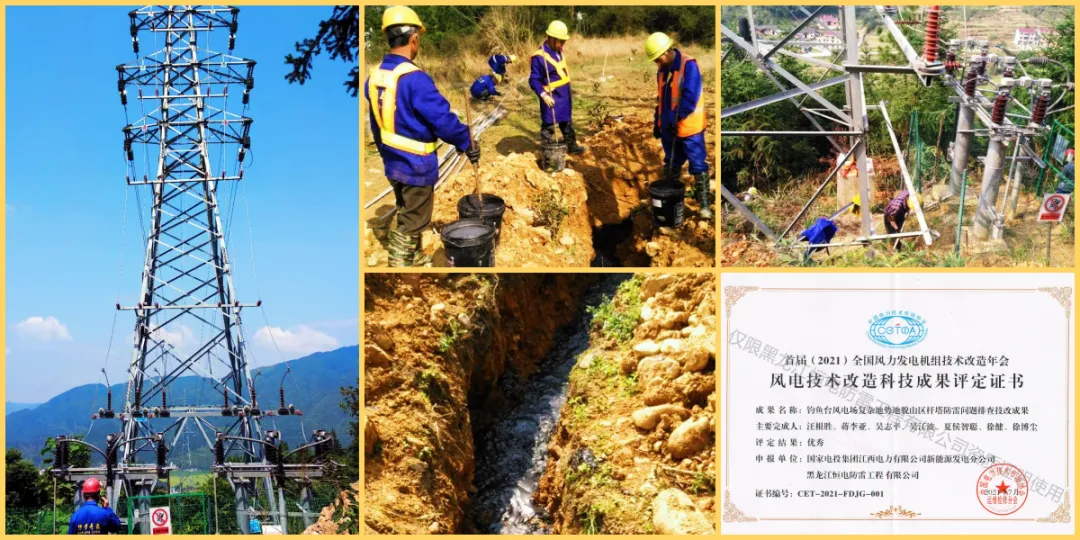
The Diaoyutai Wind Farm in Taihe, Jiangxi is located in a hilly area with a complex distribution of transmission lines. The towers are irregularly distributed across varied terrain, and the uneven soil resistivity has led to frequent tripping incidents. Conventional testing could only identify partial issues, failing to reveal the root cause.
To address these challenges, we conducted a systematic analysis and research in collaboration with the New Energy Power Generation Branch of SPIC Jiangxi Electric Power Co., Ltd. Through on-site inspections, oscillographic analysis, grounding resistance testing, as well as resistivity testing and back-calculation, we determined that the root cause of the tripping was back-flashover triggered by excessive impulse grounding resistance.
This retrofit project specifically targeted the grounding systems of the towers along the entire line. We also inspected and upgraded lightning interception measures, equipment equipotential bonding, surge arrester performance, and wiring methods, with a key focus on enhancing the current discharge capacity of the grounding grid. By applying Flexible Grounding Technology, we fundamentally adjusted the environmental structure within the effective range of the grounding grid. This significantly improved its impulse withstand level and its ability to neutralize lightning charges, thereby substantially reducing lightning overvoltage.
Following the retrofit, the wind farm has operated for over a year without a single lightning-induced tripping incident. This validates the effectiveness of our joint efforts, confirms the accuracy of our problem diagnosis and the appropriateness of the measures taken, ultimately delivering highly satisfactory results.
Currently, the transmission line is not only running stably but has also saved the state significant maintenance costs while drastically reducing economic losses. The retrofit of this single line alone generates an annual economic benefit exceeding 1 million RMB.
Retrofit Project of Liangfeng'ao Wind Farm, Sichuan Yanyuan Huadian New Energy Co., Ltd.
Awarded the Excellent Scientific and Technological Achievement in Wind Power Technology Retrofit at the 1st (2021) National Wind Turbine Technology Retrofit Annual Conference
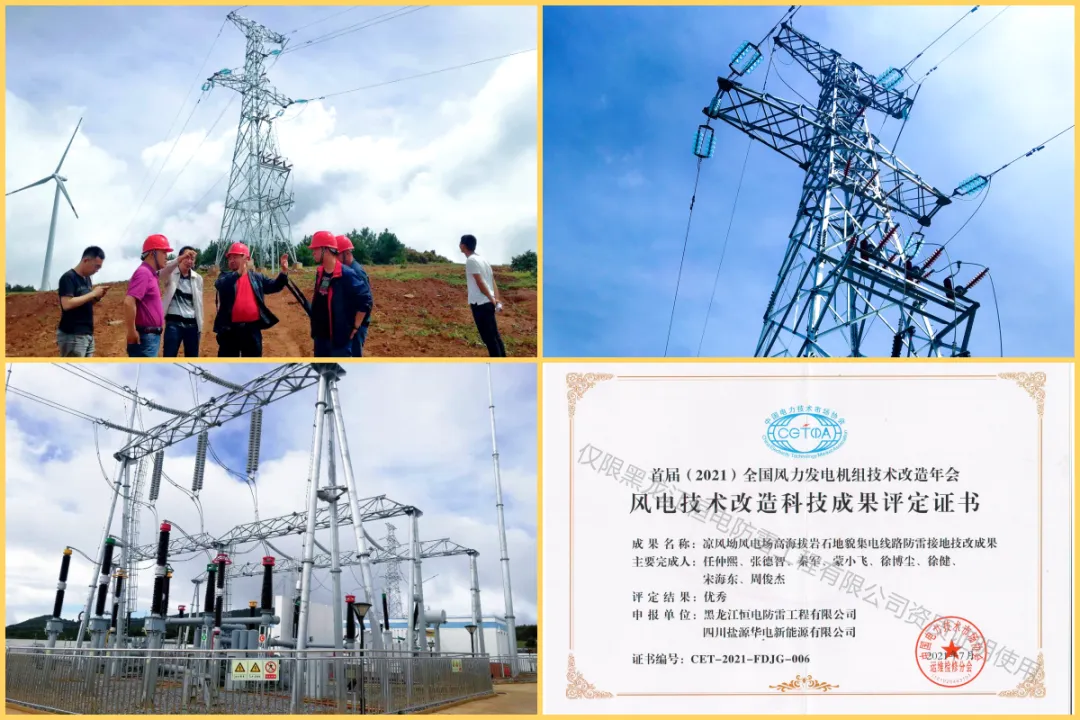
The Liangfeng'ao Wind Farm in Yanyuan, Sichuan is located on a plateau over 3,000 meters above sea level. The combination of severe thunderstorms and a rocky, soil-scarce terrain has resulted in excessively high grounding resistance, making it difficult to effectively ground the equipment. This makes the wind farm highly susceptible to overvoltage back-flashover, leading to frequent lightning-induced tripping. However, conventional testing showed normal results and failed to identify the underlying issue.
In collaboration with Sichuan Yanyuan Huadian New Energy Co., Ltd., we applied Flexible Grounding Technology to address this challenge. By improving the structure of the grounding grid, we effectively enhanced its impulse withstand performance, fundamentally solving the frequent tripping problem and significantly strengthening operational stability.
The application of Flexible Grounding Technology in this project has yielded remarkable results, drastically reducing the lightning tripping rate. Prior to the retrofit, Collector Lines 1 and 2 at Liangfeng'ao Wind Farm suffered significant power generation losses due to lightning trips over a three-year period. Since the completion of the retrofit project, the lines have operated without a single lightning tripping incident. This improvement is expected to generate direct economic benefits exceeding 1 million RMB annually.
Lightning Protection and Grounding Retrofit Project for 35kV Collector Line Towers at Xiangdian Linwu Dachong Wind Farm
We provided technical support to Linwu Xiangdian New Energy Co., Ltd. for the grounding rectification of the 35kV collector lines at the Linwu Dachong Wind Farm. By adopting flexible grounding conductors for the retrofit, we significantly improved the lightning withstand level of the grounding grid.
The project covered over 50 towers across two lines. Following the retrofit, the lightning tripping rate dropped drastically—previously, the line experienced up to 46 lightning trips per year. Since the system operated on a single circuit, these frequent outages caused massive losses in power generation.
After implementing the flexible grounding technology, power generation in 2017 increased by 18.2 million kWh compared to the same period in 2016, equivalent to 11.17 million RMB in revenue. Additionally, the project prevented over 40 tripping incidents.
Lightning Protection and Grounding Retrofit Project at Huadian Maoming Zhong'ao Wind Farm
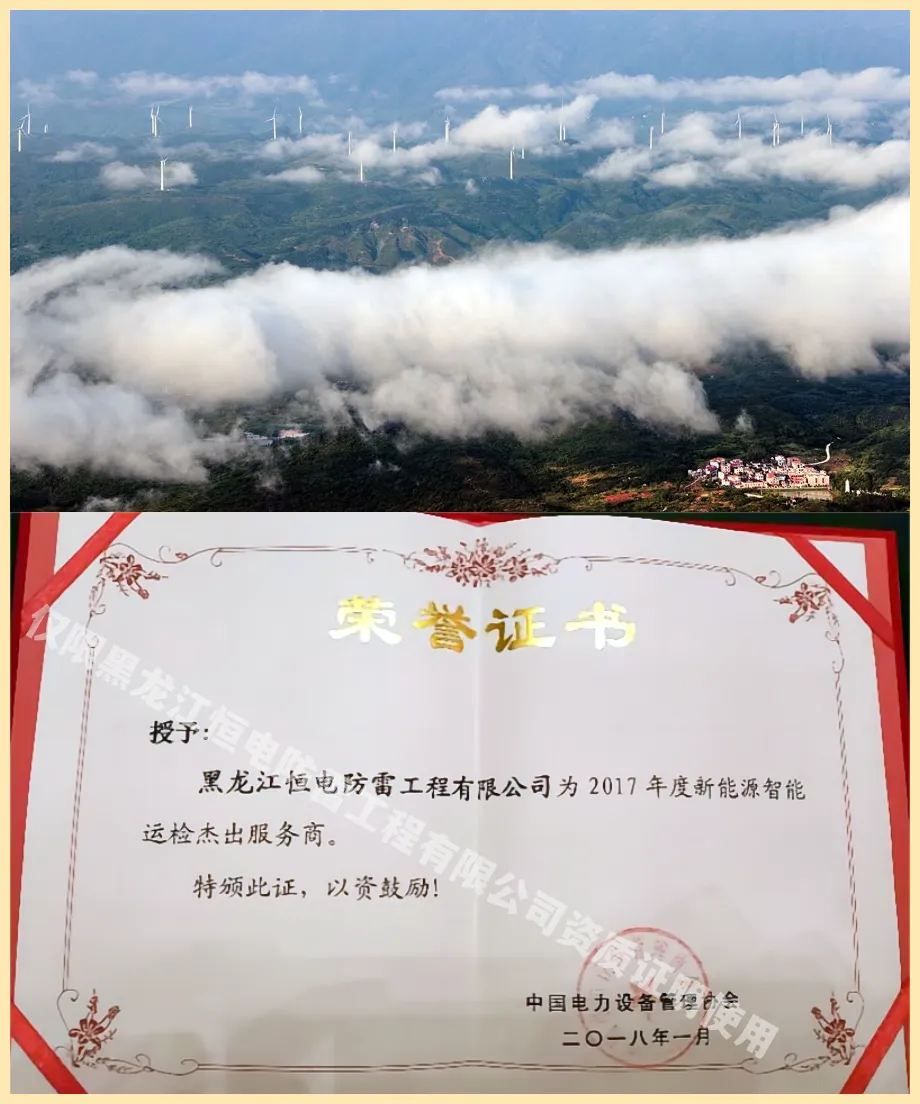
Awarded the 2017 Advanced Technology Award for Intelligent Operation and Maintenance of New Energy

Since 2014, the Huadian Zhong'ao Wind Farm has experienced frequent lightning-induced tripping incidents, with nearly 20 pieces of equipment damaged or burned out by lightning strikes each year.
Maoming Zhong'ao Wind Power Co., Ltd. collaborated with our expert team to conduct a systematic analysis and research on the accidents caused by lightning strikes at the booster station and collector lines, and subsequently implemented targeted retrofits.
This project utilized Flexible Grounding Technology to improve the grounding environment and constructed a new structural grounding grid, maximizing the elimination of lightning overvoltage impacts. From the completion of construction in March 2017 to the end of the rainy season in October—a period of 108 days—the system achieved safe and stable operation. Notably, not a single incident of equipment damage caused by lightning occurred throughout 2017.
Huadian Fuxin Energy Corporation organized a scientific project review and acceptance meeting for "Research on Lightning Protection Technology for Wind Farms" in Maoming City. The expert panel unanimously agreed that this technology is suitable for promotion in mountainous wind farms and provides excellent assurance for the safe operation of wind power systems, thereby approving the project's acceptance.
Lightning Protection and Grounding Retrofit Project for the Booster Station at Yueshuidian Ruyuan Dabu Wind Farm
Awarded the 2023 Outstanding Technology for Smart Wind Power Operation and Maintenance in China
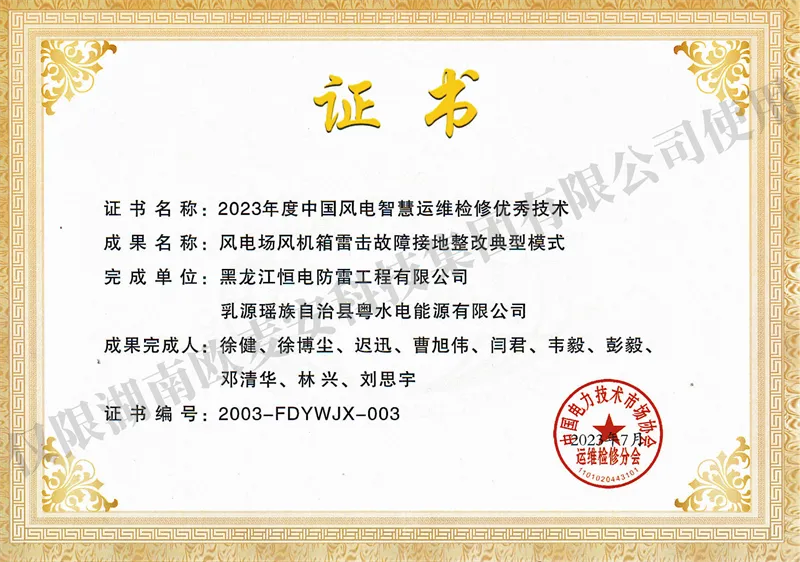
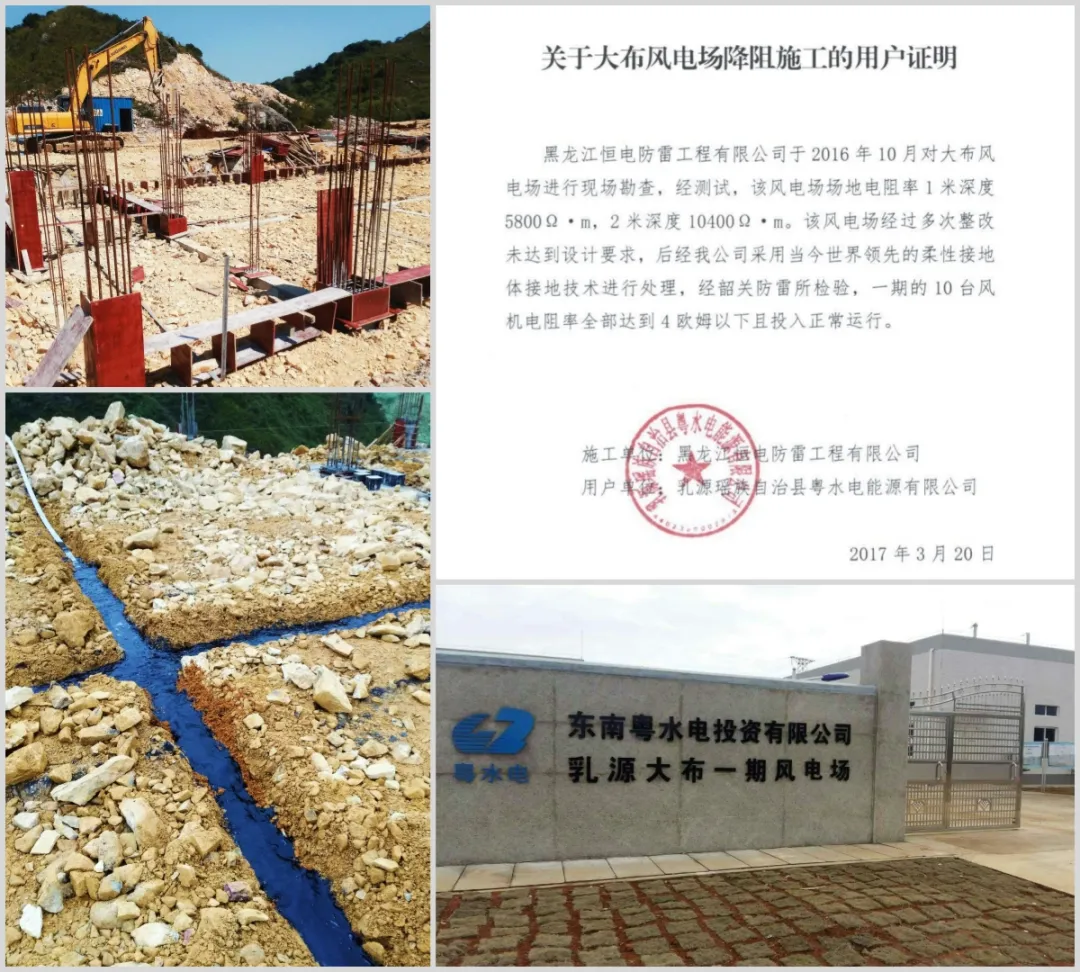
The average soil resistivity at the booster station of Ruyuan Dabu Wind Farm is 18,252 Ω·m. The soil cover is relatively thin, and the subsurface consists mostly of moderately weathered sandstone, making design and construction extremely challenging. Despite multiple rectification attempts, the grounding requirements could not be met.
We applied Flexible Grounding Technology by filling the sandstone fissures with a conductive gel-like material. This approach significantly increased the effective contact area between the metal grounding electrodes and the earth, greatly improving the dissipation environment for lightning current. Ultimately, we successfully reduced the grounding resistance to compliant levels. According to third-party testing, the grounding resistance of all ten wind turbines was brought down to below 4Ω.
中电莱芜风机塔杆改造项目
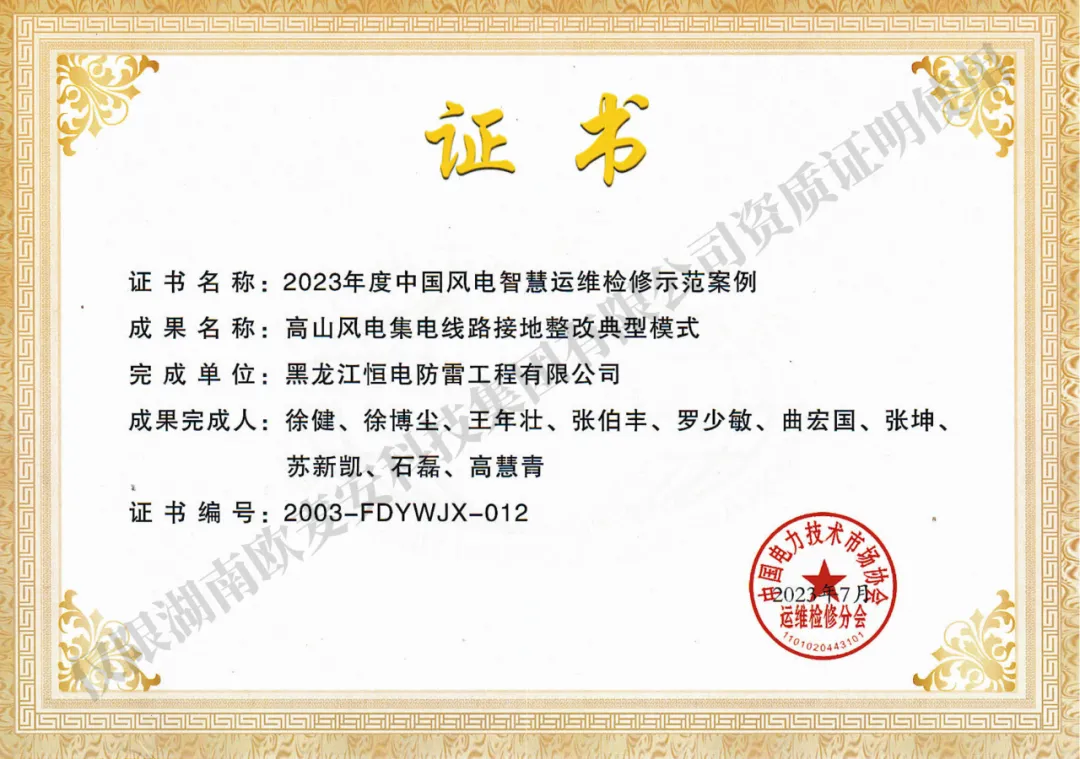
Awarded the 2023 Demonstration Case for Smart Operation and Maintenance of Wind Power in China
The CEC Laiwu Wind Farm is located in the central-southern mountainous region of Shandong Province, constructed along the mountain ridges. The area has sparse vegetation and a thin soil layer, with bedrock underneath, resulting in soil resistivity generally exceeding 5000 Ω·m—making for extremely poor grounding conditions. Additionally, many collector line towers are situated near cliffs on narrow terrain, which limits the available space for expanding the grounding grid.
We applied Flexible Grounding Technology by pouring liquid material into the grounding trenches to fill them. This process forms a conductive film over the underlying rock structure, cleverly integrating the complex geological environment with the metal grounding electrodes to create an integrated current-dissipation system. By maximizing the effective cross-sectional area of the grounding grid, we successfully brought the grounding resistance down to meet the required standards.
Other Successful Case Studies
Lightning Protection and Grounding Retrofit Project for the National Tianqin Project Laser Ranging Station,Gravitational Wave Detection Laboratory,and Tangjiawan Dananshan Emergency Shelter Tunnel
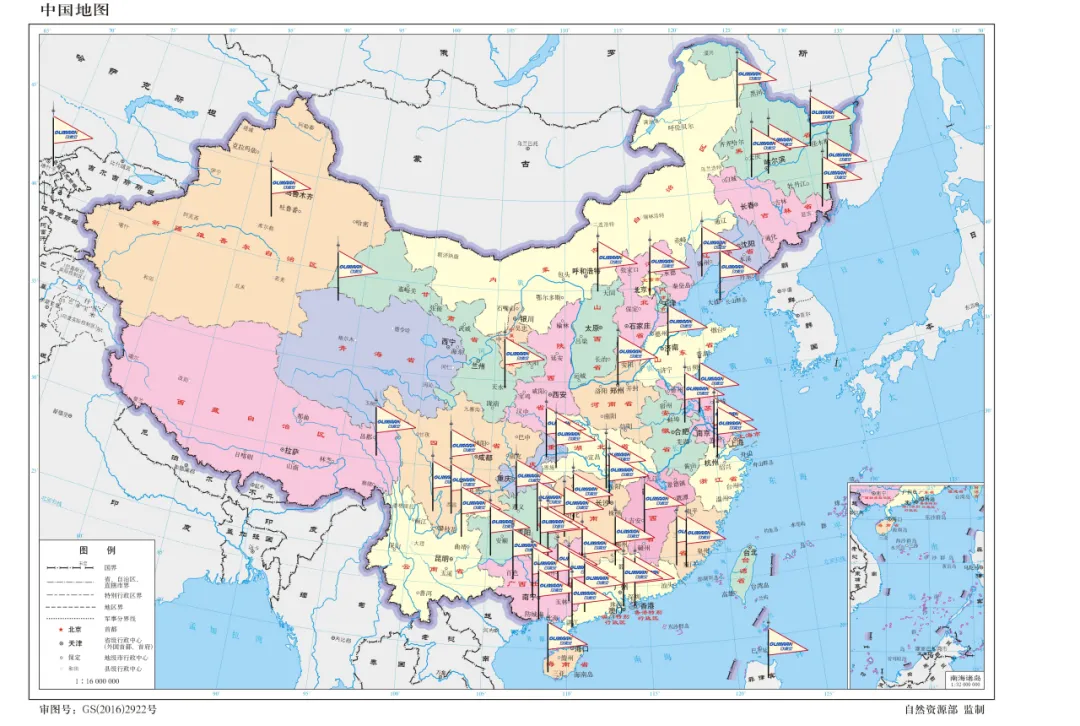
Lightning Protection and Grounding Project at Huaneng Guangxi Guigang Qixingling Wind Farm
Datang Sichuan Liangshan Puge Wind Farm Retrofit Project
Huadian Sichuan Yanyuan Liangfeng'ao Wind Farm Retrofit Project
Guodian Youneng Quanzhou Xunfeng Wind Farm Retrofit Project
SDIC Yunnan Dongchuan Yeniu Wind Turbine Retrofit Project
SPIC Jiangxi Diaoyutai Wind Farm Retrofit Project
CR Power Guangdong Yangjiang Yangxi Wind Farm Retrofit Project
CGN Fujian Anxi Longmen Wind Turbine Retrofit Project
CEC Shandong Laiwu Wind Farm Retrofit Project
Yueshuidian Guangdong Ruyuan Dabu Wind Farm Booster Station and Wind Turbine Lightning Protection&Grounding Project
Xiangdian Linwu Dachong Wind Farm 35kV Collector Line Tower Lightning Protection&Grounding Retrofit Project
Jinneng Shanxi Gaojiayan Wind Farm Retrofit Project
Central Southern Institute Xupu Langangshan Wind Farm Grounding Project
Guangdong Maoming Zhong'ao Wind Farm Booster Station Lightning Protection&Grounding Retrofit Project
Jiuzhou Electrical Guizhou Guanling Wind Farm Lightning Protection Retrofit Project
Transmission Line Application Cases
State Grid Sichuan Ya'an 500kV UHV Grounding Project
State Grid 220kV Yanshou Substation Lightning Protection and Grounding Retrofit Project
State Grid 220kV Henan Substation Lightning Protection and Grounding Retrofit Project
State Grid 220kV Huanshan Substation Lightning Protection and Grounding Retrofit Project
State Grid 220kV Limin Substation Lightning Protection and Grounding Retrofit Project
China Southern Power Grid(CSG)110kV Shenzhen Zhongkang Substation Lightning Protection and Grounding Project
China Southern Power Grid(CSG)110kV Zhanjiang Wuchuan Substation Lightning Protection and Grounding Project
China Southern Power Grid(CSG)110kV Zhanjiang Changqi Substation Lightning Protection and Grounding Project
CSG Duyun Power Supply Bureau 110kV Gaoshan Transmission Line Grounding Retrofit Project
CSG Guiyang Power Supply Bureau 110kV Gaoshan Transmission Line Grounding Retrofit Project
CSG Liupanshui Power Supply Bureau 110kV Gaoshan Transmission Line Grounding Retrofit Project
Fujian Shitang Substation Grounding Retrofit Project
WISCO Group Kunming Steel Thermal Power Plant Lightning Protection and Grounding Retrofit Project
LB Group Lufeng Titanium Industry Co.,Ltd.New 220kV Substation Lightning Protection and Grounding Project
Cooperation Partners
Hunan Oumaan Technology Group Co., Ltd
Tel: 0731-88329910